

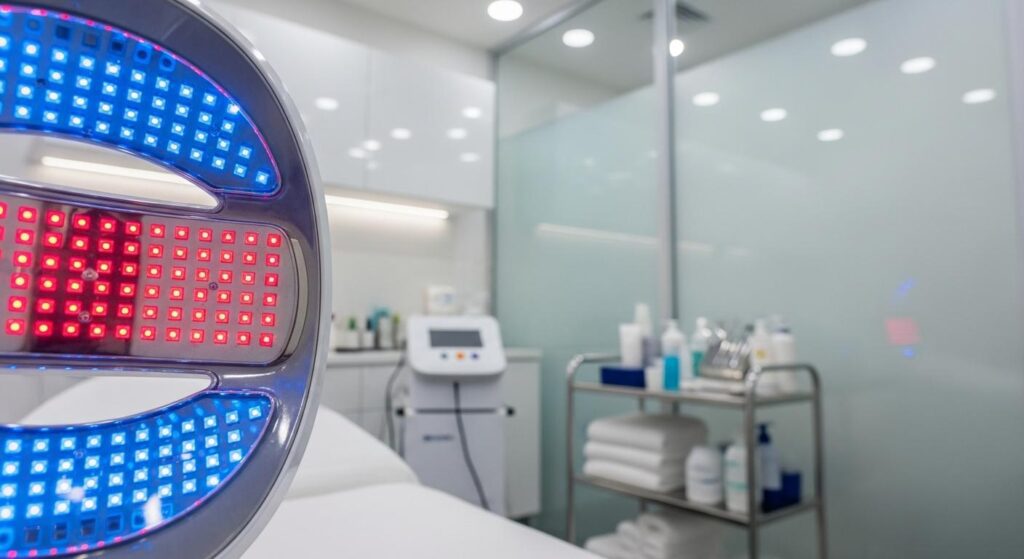

Cos’è la Terapia con Luce LED e Perché la Pelle Risponde ad Essa
Un dermatologo una volta mi ha detto scherzando che le cellule della pelle sono un po’ come le piante da appartamento: se ricevono la luce giusta, si comportano meglio. Questa idea è al centro della terapia con luce LED, un trattamento cutaneo non invasivo che utilizza specifiche lunghezze d’onda luminose per influenzare il funzionamento delle cellule della pelle.
A differenza della terapia laser o della depilazione laser, la luce LED non riscalda né danneggia la pelle. La luce penetra delicatamente negli strati superficiali, dove i diversi colori interagiscono con le cellule in modi differenti. Alcune lunghezze d’onda aiutano a calmare l’infiammazione, altre riducono i batteri responsabili dell’acne come P. acnes, mentre altre ancora favoriscono la circolazione e il rinnovamento cutaneo.
Sul mercato esistono sia trattamenti professionali in clinica sia dispositivi per la terapia LED da usare a casa. Le opzioni di grado medicale emettono una luce più intensa e controllata, mentre i dispositivi domestici puntano sulla sicurezza e sulla costanza d’uso. Nella maggior parte dei casi, non conta l’intensità, ma la regolarità: prendersi cura della pelle, giorno dopo giorno.
Understanding Acne and Rosacea at the Skin Level
Acne and rosacea may look similar on the surface, yet they behave very differently underneath. Acne vulgaris involves clogged pores, excess oil, inflammation, and acne lesions driven by bacteria. Rosacea symptoms, including facial redness and flushing, stem from sensitive blood vessels, inflammation, and a weakened barrier.
Inflammatory acne tends to tolerate stronger acne treatment options, though irritation is common. Rosacea prone skin, including cases of ocular rosacea, reacts quickly to stress, heat, and harsh ingredients. That’s why many traditional treatments feel like too much for sensitive skin.
LED light therapy work sits in a gentler middle ground. It doesn’t replace prescriptions or medical care, and it’s not a skin cancer treatment, yet it can support skin health when other approaches feel overwhelming.
How Blue, Red, and Near-Infrared Light Work
Blue light therapy targets acne causing bacteria directly. When blue light hits p acnes, it creates a reaction that helps reduce active acne breakouts without drying the skin. Think of it as quietly lowering the population rather than carpet-bombing your face.
Red light therapy, using red LED light, focuses on inflammation and circulation. Red light encourages calmer skin tone, supports collagen activity, and can soften the look of wrinkles over time. Near-infrared light reaches a bit deeper, assisting skin repair and comfort.
Some devices also include yellow light therapy or yellow light, which may help with redness and uneven skin tone. Combining wavelengths often feels better for the skin, especially when acne and rosacea overlap. What light therapy does not do is erase acne scars overnight or replace laser treatment for severe skin problems.
Benefits of LED Light Therapy for Acne-Prone Skin
For acne-prone skin, LED light therapy offers a rare combination: effectiveness without aggression. Blue light therapy reduces acne breakouts by targeting bacteria, while red light supports healing and calmer skin texture.
This approach helps manage oil balance without stripping the barrier. Post-acne redness softens gradually, and clearer skin becomes more realistic with steady use. Acne scars may look less angry over time, though deep scarring still benefits from professional procedures like photodynamic therapy or laser therapy.
Results tend to unfold slowly. That’s normal. Skin prefers patience.
Benefits of LED Light Therapy for Rosacea-Prone Skin
Rosacea prone skin often responds well to LED therapy because there’s no friction, heat, or abrasion involved. Red light therapy can ease facial redness and support barrier repair, which is essential for this skin condition.
Wavelength choice matters here. Blue light is usually minimized, while red light and infrared light take center stage. In most cases, people notice fewer flare-ups and more stable skin tone when sessions are consistent.
LED light therapy works best alongside dermatologist-guided care, especially for persistent rosacea symptoms. It’s a support system, not a solo act.
What Results Look Like and When to Expect Them
With acne, early changes often show up within four to six weeks as fewer inflamed acne lesions and quicker healing. Rosacea improvements usually take longer, sometimes eight to twelve weeks, with reduced flushing and improved comfort.
Progress is subtle. Skin texture feels smoother. Redness fades a little. Makeup sits better. These quiet changes signal improving skin health.
Outcomes depend on skin type, consistency, and daily habits. Gentle cleansing, hydration, and sun protection all influence how well light therapy supports clearer skin.
At-Home Devices vs. In-Clinic LED Treatments
At-home LED light therapy devices, including masks and panels, are designed for convenience. They deliver lower-strength light over larger areas, making them suitable for regular use and maintenance.
In-clinic treatments offer higher intensity, professional oversight, and targeted protocols. These can be helpful for stubborn acne breakouts, inflammatory acne, or persistent rosacea. Safety matters with both options, especially around the eyes.
Choosing between them often comes down to lifestyle, budget, and the severity of your skin concern. Neither option replaces medical advice, and neither should feel uncomfortable.
Integrating LED Light Therapy Into a Skin-Focused Routine
Clean skin responds best to light. A gentle cleanser, no active acids right before treatment, and a calm environment set the stage. After LED light therapy, focus on hydration and barrier care.
Ingredients like ceramides, niacinamide, and soothing botanicals pair well with LED therapy. Overusing exfoliants, skipping sunscreen, or expecting instant transformation can limit results.
When used consistently, LED light therapy supports skin health, steadier skin tone, and more comfortable makeup wear. For many people dealing with acne, rosacea, or another skin problem, that quiet reliability is exactly what makes light therapy worth keeping around.