


How to Prevent Gel Lifting: Prep Mistakes That Ruin a Manicure
A nail technician once told me she could predict gel lifting before a client even picked a color. Not because of the gel nail polish brand, or the nail art inspiration saved on their phone, but because of what their hands felt like. Too slick. Too damp. Or oddly dry in that over-sanitized way. It sounds almost mystical, but in most cases, gel lifting begins long before the gel application step ever starts.
If you’ve ever had a gel manicure look perfect on day one, only to show peeling, chipping, or premature lifting around the cuticle by day four, you’re not alone. The culprit is usually nail prep. Quiet, unglamorous nail prep. And yes, it matters more than the gel product itself.
Understanding Gel Lifting: What’s Really Happening on the Nail
Gel lifting rarely arrives all at once. You’ll often see it first at the cuticle area, along the nail tip, or creeping in from the sidewalls. A tiny gap. A faint shadow. That’s early gel nail lifting, a bonding failure between the gel and the natural nail plate.
This isn’t a flaw in gel nails or builder gel lifting by default. It’s a chemistry issue. Gel adhesion depends on how well the base gel anchors to the nail surface, and that surface is alive, porous, and constantly changing. Prep mistakes tend to reveal themselves days later, once daily life adds stress to the entire nail.
Early lifting stays superficial. Full separation means the gel polish lifting cleanly off the nail bed. Both point back to preparation.
The Natural Nail Plate: Why Prep Starts Before Products
The natural nail looks smooth, but under a microscope it resembles a sponge layered with keratin. Oil, moisture, and even residual hand cream settle into that structure. That’s why proper nail prep is less about stripping the nail and more about balance.
Nail health and nail condition aren’t the same thing. Healthy nails can still be oily on application day. Dry nails can be dehydrated from constant washing. One-size-fits-all nail prep rarely works because hands live very different lives.
If someone washes dishes all morning or applies lotion on autopilot, that affects gel adhesion. The nail plate remembers everything.
Cleansing Mistakes That Leave Residue Behind
Basic hand washing feels responsible, but soap residue, sanitizer film, and leftover lotion interfere with gel polish application. Water also swells the nail plate, which can lead to nail lifting once the nail dries and contracts.
Skipping a dedicated nail cleanser is a common mistake. Nail cleanser removes invisible residue without flooding the nail with moisture. Overusing dehydrators can cause the opposite problem, especially for already dry nail beds.
Timing matters. If too much time passes between cleansing and base gel application, natural oils migrate back onto the nail surface. That’s gel lifting waiting to happen.
Cuticle Prep Errors That Break the Seal
The cuticle isn’t just the visible skin at the base of the nail. There’s a thin, nearly invisible layer of non-living tissue clinging to the natural nail plate. If it isn’t removed, gel cannot fully bond.
A cuticle pusher and cuticle remover help, but aggressive cutting often backfires. Overworked cuticles swell, then shrink, breaking the seal of the gel product.
Flooding product near the cuticle looks smooth at first, yet it weakens wear time. Clean margins matter more than perfect symmetry, especially for gel manicure longevity.
Buffing and Shaping: When Too Much (or Too Little) Is the Problem
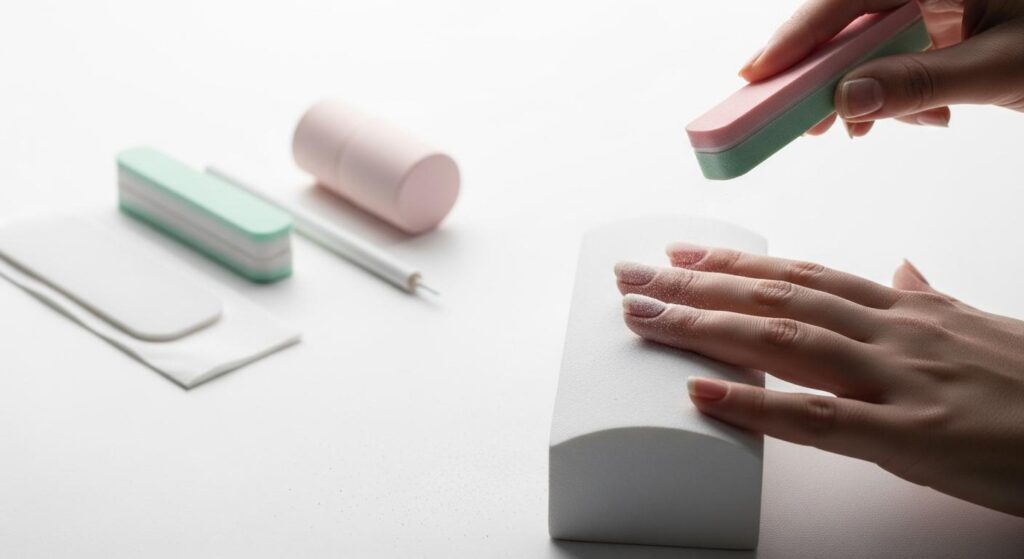
Buff nails to remove shine, not to thin the nail. Over-buffing damages the natural nail and reduces long-term gel adhesion. Under-buffing leaves slick patches where gel polish lifting begins.
Uneven prep creates uneven stress. Nail shape also plays a role. Sharp corners on a nail tip catch daily friction, leading to peeling or chipping.
Dust removal matters as much as buffing itself. Leftover dust acts like a barrier between the nail and the base gel.
Product Layering Mistakes That Start at Prep
Base gel choice matters. A base designed for hard gel may not support gel nail polish or builder gel properly. Mixing incompatible nail products increases lifting risk.
Thick layers create internal tension. More product often shortens wear time. Curing issues frequently trace back to prep, not the lamp.
Whether it’s acrylic nail overlays, hard gel, or nail enhancement systems, adhesion begins at the natural nail, not the topcoat.
Skin, Environment, and Timing: Hidden Factors in Gel Longevity
Skin oils don’t stay put. They migrate back onto the nail plate quickly, especially for clients with naturally oily skin or sweaty hands. Heat, humidity, and cold all affect preparation.
Rushing nail prep creates delayed lifting. Long breaks between steps allow moisture to return. A professional nail technician learns to read these small windows of timing.
Even nail techs notice patterns. Same client. Same nail. Same lifting spot. That’s information.
Building a Prep Routine That Supports Long-Lasting Gel
Consistency matters more than fancy technique. Nail technicians who adjust prep based on nail type see less gel lifting overall. Dry nail beds need restraint. Oily nails need control, not punishment.
Observe lifting patterns across the entire nail. Is it the nail bed, the nail tip, or the cuticle? Each tells a different story.
Proper preparation supports nail comfort, appearance, and nail care over time. When gel adhesion is right, gel nails feel like part of the nail, not something sitting on top.
Preventing gel lifting isn’t about perfection. It’s about attention, patience, and respecting the natural nail plate. When prep works, the manicure doesn’t just last. It rests there quietly, doing its job, while life happens around it.