


Best Makeup for Acne-Prone Skin: How to Cover Without Clogging
A makeup artist once told me that most acne skin doesn’t actually need more makeup. It needs less panic. That stuck. Many people with acne prone skin approach makeup like a repair job after a storm layer after layer, hoping nothing leaks through. Yet in most cases, the way makeup sits on skin, and whether it triggers an acne breakout, depends far more on compatibility than on coverage itself.
So let’s talk about how to choose the best makeup for acne-prone skin: how to cover redness, acne scars, and uneven tone without clogging pores or upsetting delicate skin. Not perfectly. Just thoughtfully.
Understanding Acne-Prone Skin and Makeup Compatibility
Acne prone skin is not one thing. It can be oily skin that produces excess sebum, dry skin that traps dead skin cells, or sensitive skin that reacts to half the ingredient list. What it usually shares is a tendency toward clogging pores and inflammation.
Pore behavior matters more than how full the coverage claims to be. Surface acne think whiteheads or redness behaves differently from deeper congestion under the skin. Makeup that sits well on one may irritate the other. That’s why “oil-free” makeup product labels are only a partial clue. Coconut oil is an obvious heavy hitter, but waxes, pigments, and even some soothing agents can become pore clogging ingredients when combined poorly.
You’ll often find acne prone skin overlapping with sensitive skin, which means fragrance, alcohol, or certain setting spray formulas can quietly cause redness even if acne treatment is working well.
Why Skincare Determines How Makeup Behaves
Makeup is only as cooperative as the skin care underneath it. Clean skin creates an even surface, but hydration is what keeps foundation from cracking, sliding, or bunching around active acne.
A lightweight moisturizer supports barrier health, helping makeup last longer without suffocating skin. Heavy occlusives can trap heat and bacteria, especially on oily skin or combination skin type.
Consistent skin care gentle cleansing, mild exfoliation to manage dead skin cells, and appropriate acne treatment often reduces the urge to use high coverage every day. Clear skin, or clearer-looking skin, tends to show through thinner layers better than we expect.
Makeup Ingredients That Support Acne-Prone Skin
Non comedogenic makeup sounds reassuring, but the term isn’t regulated. A non comedogenic product simply avoids ingredients known to clog pores in most cases. Formula balance still matters.
Ingredients like niacinamide, zinc, and silica often support acne prone skin by calming redness and controlling shine. Modern pigments have improved, allowing non comedogenic makeup foundation formulas to offer medium coverage in breathable layers.
Many non comedogenic concealer options now include soft-focus powders that blur texture without packing into pores. That balance coverage plus comfort is what acne skin tends to tolerate best.
Ingredients That Commonly Trigger Breakouts
Heavy oils and waxes that linger on skin are frequent troublemakers, especially when layered repeatedly. Coconut oil, for example, is nourishing for some skin types but commonly problematic for acne prone skin.
Fragrance and high levels of alcohol can aggravate sensitive skin and provoke redness, even if breakouts don’t appear immediately. Silicones get a bad reputation, yet they are usually inert and sit on top of skin rather than sinking in. Problems arise when they are paired with pore clogging ingredients underneath.
Patch testing sounds fussy, but it’s practical. A new makeup product applied along the jawline for a few days tells you far more than a label ever will.
Choosing the Right Base Products: Foundation, Concealer, Powder
Sheer-to-medium coverage works well as a daily option for acne prone skin. It evens tone while letting skin breathe. Full coverage has its place, though spot concealing tends to look more natural than masking the entire face.
A non comedogenic concealer applied only where needed around acne scars or active blemishes keeps pores clearer. Liquid and cream formulas usually suit dry skin and delicate skin better, while powder foundation can work nicely for oily skin when applied lightly.
Mineral makeup can be helpful for some skin types, though it may emphasize texture on dry or sensitive skin. Powder should set makeup, not announce itself.
Application Techniques That Reduce Breakouts
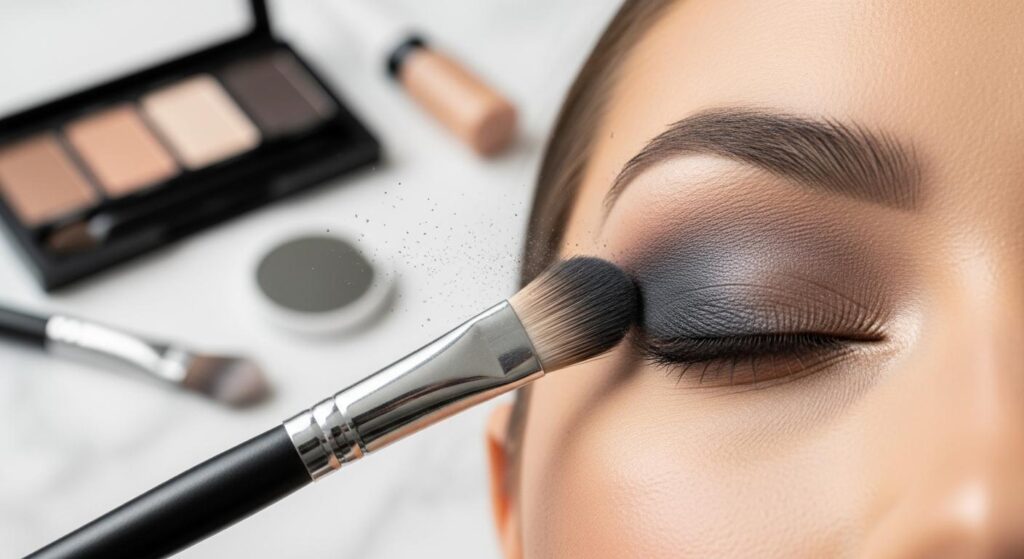
Tools matter more than most people realize. Clean brushes distribute makeup evenly, while damp sponges press coverage into skin without friction. Fingers are fine too, provided they’re clean.
Pressing makeup gently rather than dragging it across skin reduces irritation around active acne. Thin layers outperform thick ones almost every time.
Over-blending can disturb blemishes and redness, so stop sooner than you think. Cleaning tools regularly becomes part of skin care, not just hygiene, especially for acne skin.
Natural-Looking Coverage That Lets Skin Breathe
Modern makeup favors real skin texture. Pores exist. Freckles show up. Redness peeks through a little. Soft-focus finishes blur without sealing everything shut.
Strategic coverage concealer only where necessary, foundation where tone needs balancing keeps makeup looking fresh. Lighter makeup often supports long-term improvement by reducing daily irritation.
Matching skin tone correctly also matters. Fair skin tone, medium skin tone, medium deep skin tone, and deep skin tone each reflect light differently. Undertones neutral undertone, pink undertone, cool pink undertone, cool red undertone, olive undertone, neutral olive undertone, warm golden undertone, neutral golden undertone help makeup disappear into skin rather than sit on top.
Common Myths About Makeup and Acne
Makeup does not automatically cause acne. Habits do. Sleeping in makeup traps oil and bacteria in pores, while wearing non comedogenic makeup during the day on clean skin is usually fine.
Acne prone skin does not need to avoid makeup altogether. It needs the right makeup application and realistic coverage expectations.
More coverage rarely equals better skin days. The best makeup artist trick is restraint. Clear skin over time comes from consistent skin care, sun protection, gentle formulas, and letting skin rest when it asks for it.
Lip color, eye makeup, and even setting spray matter less to breakouts than base products, though fragranced mists can bother sensitive skin. When in doubt, simpler formulas tend to behave better.
The best makeup for acne-prone skin is not about hiding. It’s about cooperation between makeup, skin, and the very human desire to feel comfortable in your own face, whether that face is breaking out or blissfully calm.