


French Manicure Modernized: The New Shapes, Finishes, and Soft Color Twists
There’s a small moment that happens at nail salons everywhere. Someone flips through a book of nail designs, pauses at a classic french manicure, then hesitates. Is it too safe? Too wedding nail designs circa 2004? Nail artists see this pause all the time, and most of them smile, because the french manicure style quietly refused to stay frozen in time.
The truth is, french nails never really left. They just changed shape, softened their edges, and picked up a bit of artistic flair along the way. The modern twist isn’t loud or showy. It’s subtle, clever, and surprisingly flexible for real life.
Why the French Manicure Still Matters Today
The original appeal of the classic french manicure was never about white tips alone. It was about balance. Clean lines, a tidy nail bed, and a sense of order that made hands look finished without shouting for attention.
That idea still holds. A well-done manicure, especially a french mani, works like a tailored blazer. It supports the rest of your style rather than competing with it. Nail care habits, from cuticle oil to gentle shaping, often matter more than nail art itself.
Minimal nail design also happens to be easier to live with. Chips hide better. Growth is less obvious. For many people, the french tip nails feel like part of an overall polished appearance, not a stand-alone detail demanding constant upkeep.
New Nail Shapes Redefining the French Tip
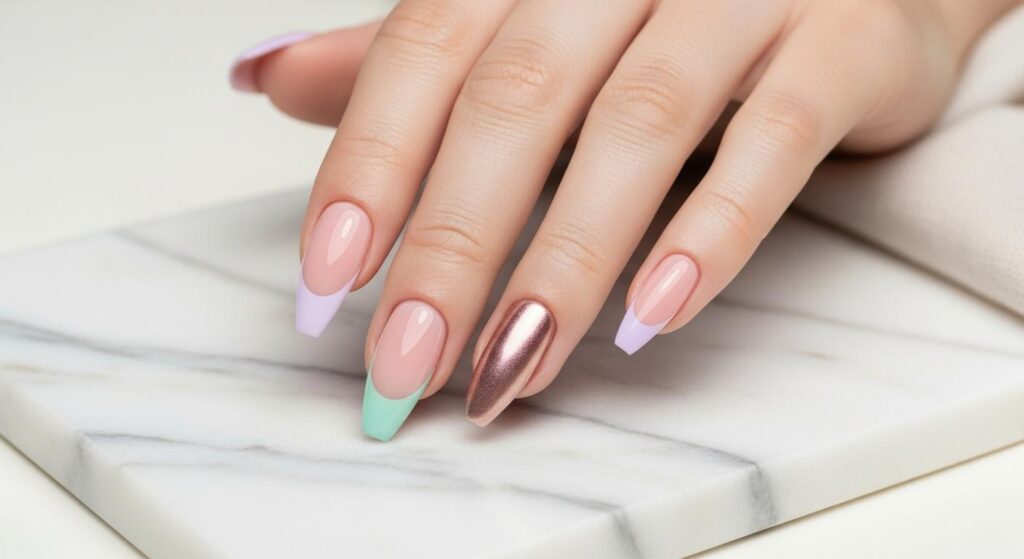
Square nails once dominated the classic look, but softer shapes have taken over. Almond, oval, soft coffin, and even refined short nail shapes now frame the french tip in a gentler way.
Nail shape influences how hands read at a glance. Almond and oval shapes tend to elongate fingers, while short nails with rounded edges feel clean and modern. Nail strength and daily habits matter here; typing, lifting, or hands-on work often pair better with subtle shaping.
A small adjustment with a file, paired with thoughtful cuticle care, can refresh a traditional french tip without changing the color at all. Sometimes the update is that quiet.
Soft Color Palettes Replacing Stark White Tips
White tips are still around, though they’ve softened. Creams, blush tones, sheer pinks, and pastel french tips now lead the conversation. These shades blur the line between nail color and natural nail.
Muted tones tend to complement more skin tones and feel easier to wear. A colored tip in milky beige or pale rose offers contrast without that sharp stripe effect. Neutral-on-neutral french nail designs create a barely-there look that reads intentional rather than plain.
You’ll often find that softer hues age better between appointments. The manicure grows out gracefully, and the nail bed stays visually calm.
Finish Matters: From High Gloss to Velvety Sheen
Finish changes everything. A high-gloss french manicure reflects light and feels classic. A satin or semi-matte finish, on the other hand, shortens the visual length of the nail and softens color.
Gel, traditional nail polish, and hybrid formulas all influence texture. Low-shine looks suit understated elegance and work environments, while gloss still shines for events or jewel tone accents.
Maintenance matters, too. Gloss shows wear faster. A velvety sheen forgives tiny imperfections and fits neatly into busy routines.
Rethinking the Tip: Micro Lines, Curves, and Negative Space
The modern french tip is often thinner. Micro lines drawn with a fine brush create a lighter visual effect, especially on short nails. Curved or angled tips replace straight edges, adding movement without clutter.
Side tips, double-line french tip designs, and geometric shapes introduce interest while leaving parts of the nail bare. Negative space helps the manicure breathe and keeps it from feeling heavy.
Precision matters more than complexity. A steady hand, clean nail tip, and thoughtful spacing do the heavy lifting.
Nail Health as the Foundation of a Modern French
No nail art can outshine unhealthy nails. A smooth nail bed, hydrated cuticles, and consistent care make even the simplest french nails look elevated.
Daily oils, gentle removal, and occasional strengthening treatments support polish wear. Over-filing and aggressive prep shorten nail life and dull the finish, especially for a classic look.
Healthy nails hold shape better, which means french tip nail designs last longer and age more gracefully.
Minimal Design Details That Add Personality
Personality doesn’t require excess. Fine metallic accents, placed sparingly, catch light without overpowering the design. Soft gradients and floral french touches offer romance without turning the manicure into a full canvas.
An accent nail can balance the look when kept subtle. Texture often comes from layering finishes rather than adding charms or heavy nail glue applications.
This approach keeps the focus on elegance, not novelty, and works across styles and ages.
Making the Modern French Work for Real Life
The beauty of the modern french manicure lies in its flexibility. It works at a desk, at a wedding, and during downtime. Short nail versions feel practical, while longer shapes suit dressier moments.
Coordinating nail color with makeup and wardrobe helps the manicure feel intentional. Soft tones pair easily with everyday style, while metallic accents or jewel tone tips add interest without commitment.
Salon techniques often help achieve cleaner results, though careful at-home work can still deliver timeless elegance. The manicure becomes part of a thoughtful beauty routine, not an isolated trend.
From traditional french manicure roots to modern nail trends filled with geometric patterns and pastel french tips, this style keeps proving something quietly reassuring. A classic doesn’t disappear. It adapts, reshapes, and finds new ways to belong.