


Skin Barrier SOS: Signs You’re Over‑Exfoliating and How to Fix It Fast
There’s a moment many of us recognize. Your skincare routine is dialed in, your exfoliating product promises glow, smoothness, fewer breakouts—and for a while, it works. Then one morning, your skin feels tight. Your moisturizer stings. Makeup slides off by noon. The glow? Gone. This, in most cases, is the quiet cry of a compromised skin barrier.
Over exfoliated skin doesn’t always announce itself dramatically. Often it whispers first, through redness, irritation, and that uncomfortable feeling that your skin just isn’t happy anymore. Let’s talk about why this happens, how to spot it early, and how to get your skin barrier repair back on track—without panic or perfectionism.
The Skin Barrier: Your Skin’s Quiet Workhorse
The skin barrier—sometimes called the moisture barrier or protective barrier—is the outermost layer of your skin. Think of it like a brick wall built from skin cells, lipids, ceramides, and natural moisturizing factors. When intact, it keeps water in and environmental stressors out.
Healthy skin doesn’t usually draw attention to itself. It feels comfortable, flexible, and calm. No tightness. No persistent redness. Just… fine. And when the barrier function is strong, everything works better—from skincare absorption to makeup longevity.
Daily habits matter here. Cleansing too aggressively, skipping sunscreen, or piling on exfoliants can slowly weaken this barrier. Not overnight, but to some degree over time. The result is a damaged skin barrier that struggles to protect itself.
Why Exfoliation Helps—Until It Doesn’t
Exfoliation has a good reputation for a reason. It removes dead skin cells that can make skin look dull or uneven in texture. Chemical exfoliants like exfoliating acids, physical scrub formulas, and enzymatic exfoliants all aim to refresh exfoliated skin.
The trouble starts when exfoliation becomes excessive exfoliation. More glow does not come from more layers of acids or harsher scrubs. In fact, exfoliating too often strips away the lipids that support the skin barrier function.
Your skin type plays a role. Oily skin may tolerate exfoliants slightly better than dry skin or sensitive skin, but environment matters too. Cold weather, sun exposure, pollution, and stress all lower the threshold for barrier damage.
Warning Signs You’re Over‑Exfoliating
Skin irritation has a particular look and feel. It’s not subtle once you know what to watch for.
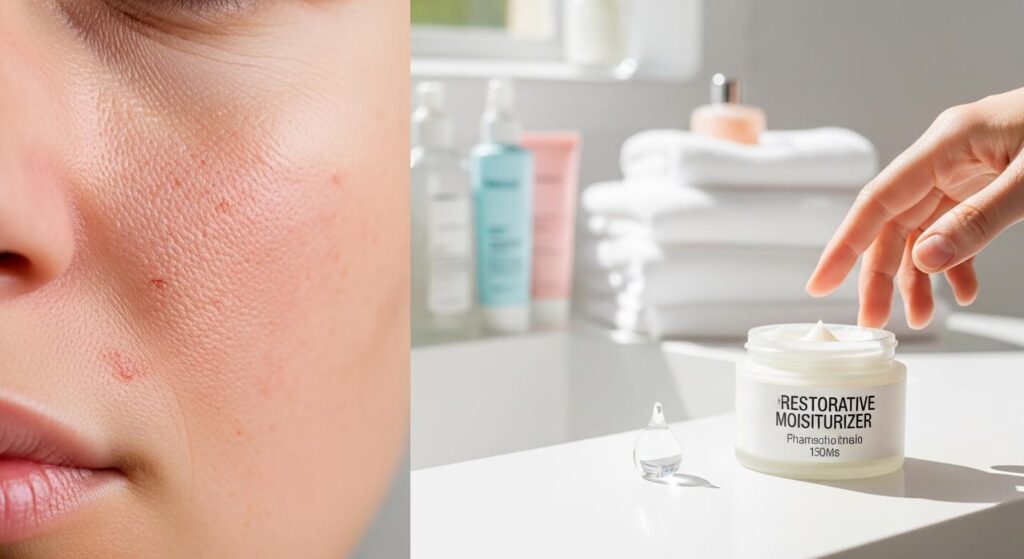
You may notice persistent redness or a flushed appearance that doesn’t fade. Products that once felt soothing now sting. Your skin feels tight even after moisturizing, or oddly dry and oily at the same time.
Breakouts may appear, though they often look irritated rather than congested. Makeup clings to patches of dead skin or separates around the nose and chin. These are classic signs of a compromised skin barrier and over exfoliated skin.
How Over‑Exfoliation Disrupts Makeup and Skincare Results
Damaged skin reflects light unevenly. That’s why foundation can suddenly look cakey or dull, even if it’s a trusted favorite. A compromised barrier also reacts more strongly to pigments, fragrances, and preservatives.
Hydrating products struggle to do their job because water escapes faster through compromised skin. Active ingredients may penetrate too deeply, increasing irritation rather than improving results.
In short, skin care and makeup can’t perform at their best when the skin barrier SOS alarm is flashing quietly underneath.
Immediate Steps to Calm an Overworked Skin Barrier
The fix doesn’t require a complicated routine. It requires restraint.
Pause exfoliation entirely—chemical exfoliant formulas, physical scrub textures, exfoliating acids, and retinoids included. Switch to gentle cleansing with a low‑foam cleanser that respects the barrier.
Focus on hydration and protection. Humectants like glycerin and hyaluronic acid draw water into skin cells, while occlusives slow moisture loss. Keep the skincare routine simple for a short recovery window.
Ingredients That Help Repair and Support the Barrier
When skin barrier repair is the goal, ingredients matter more than promises on packaging.
Ceramides and cholesterol help restore lipid balance. Panthenol and allantoin support comfort and calm irritation. Niacinamide, at skin‑friendly levels, strengthens barrier function without overstimulation.
Squalane offers lightweight emollience, and richer textures with shea butter can be especially helpful for dry skin. During repair, fewer actives often deliver better results.
Reintroducing Exfoliation the Right Way
Once skin comfort returns—no stinging, no redness—it’s safe to reintroduce exfoliation slowly. Think once a week, maybe twice, depending on skin type.
Choose lower‑strength chemical exfoliants rather than harsh scrubs. Pair exfoliation nights with barrier‑focused care, not additional actives. And listen to your skin signals instead of product promises.
Exfoliation should support healthy skin, not test its limits.
Long‑Term Habits That Keep the Barrier Strong
Consistency beats intensity every time. A steady skincare routine with gentle cleansing, daily sun protection, and thoughtful exfoliation supports long‑term barrier health.
Seasonal adjustments matter. Skin needs more support during winter, travel, illness, or periods of stress. Environmental stressors are real, and your skin responds accordingly.
When the skin barrier is strong, makeup sits better, skincare works harder, and irritation fades into the background. Healthy skin doesn’t chase trends. It listens, adapts, and stays quietly resilient.
And if your skin ever sends out another SOS? You’ll know exactly how to answer.