


Why Brow Tinting Matters More Than Ever
The first time most people notice a brow tint done well, they don’t clock the tint at all. They just think the person looks rested, clearer somehow, like they finally got eight hours of sleep and drank enough water. That’s the quiet power of brow tinting. Brows frame the face, steer attention toward the eyes, and, to some degree, act like punctuation for your features.
As brow makeup has shifted away from heavy pencils and toward believable, hair-like results, eyebrow tinting has become a favorite. A good brow tint defines shape without the daily ritual, softens sparse eyebrows, and keeps everything looking balanced. The right brow tint color can even change how sharp or gentle your features appear, which is no small thing for something measured in millimeters.
Understanding Hair Color vs. Brow Color
One of the most common surprises in brow tinting for blondes and brunettes is this: your brows were never meant to match your hair color exactly. Natural brow hair is usually cooler, slightly deeper, and less reflective than scalp hair. That’s true whether you have blonde hair, brown hair, or dark hair.
When a tint shade is too dark, especially on fair skin, brows can look heavy and stamped on. When it’s too light, the brow disappears under indoor lighting or on camera. The goal isn’t a perfect match; it’s harmony. A brow shade should sit comfortably with your hair colour, skin tone, and even eye color, like a supporting character that knows when to speak.
Brow Tinting Guidelines for Blondes
Blondes often feel the most nervous about eyebrow tinting, and that’s understandable. A single shade too deep can feel dramatic in the wrong way. For ash blonde hair, taupe and soft ash brown shades tend to work best, keeping warmth in check and preserving a natural brow color.
If your blonde leans warm, think honey blonde or golden tones, beige and softly neutral brow tint shades usually behave beautifully. Platinum blondes often do best with a lighter shade that’s neutral rather than icy. In most cases, going one shade deeper than your natural brow hair adds definition without crossing into harsh territory. Strong red or orange undertones, though, rarely play well here.
Brow Tinting Guidelines for Brunettes
Brunettes have more room to play, but that doesn’t mean darker is always better. Medium brunettes tend to suit neutral to cool browns, especially if the hair color is balanced rather than overly warm. These shades support structure without pulling attention away from the eyes.
For darker hair, richer chocolate or espresso tones often look more natural than jet-black. A dark brown tint still shows dimension, while true black can read flat against the skin. Warm brunette hair usually pairs well with chestnut brow shades that echo the hair without overpowering it. The best brow tint works with your face, not against it.
Skin Tone and Undertone Considerations
Hair color gets most of the attention, but skin tone quietly does just as much work. Cool skin tones often look best with ash-based brow colors, which keep redness at bay. Warm skin usually prefers golden or neutral brow tint colors that echo natural warmth.
Olive and medium skin tones can be trickier and often land happiest in the neutral zone, avoiding extremes. This is where undertone matters as much as depth. A tint color that complements your complexion will look intentional, while one that competes can feel slightly off, even if you can’t name why.
Tint Depth, Opacity, and Finish
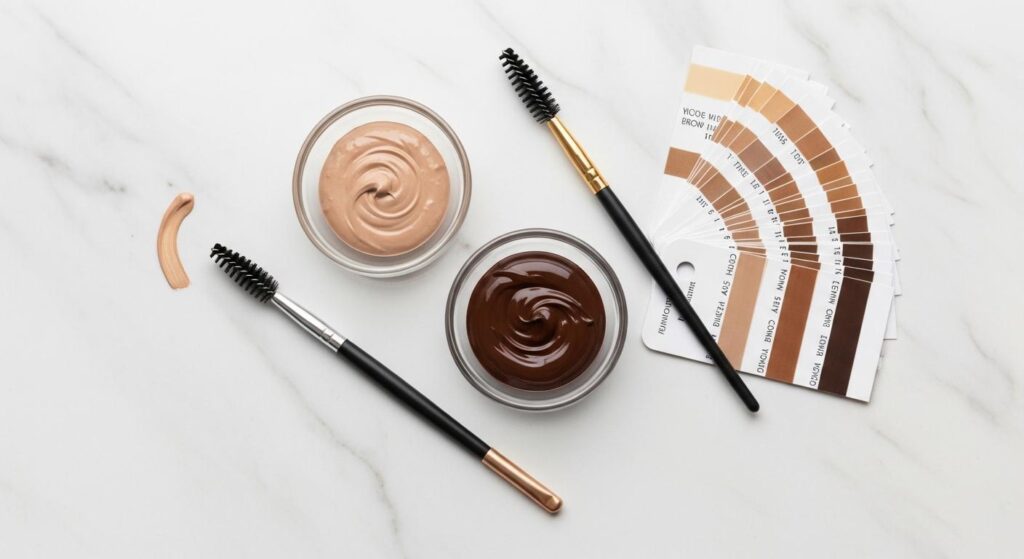
Not all eyebrow tinting is created equal. Sheer tints mimic naturally fuller brows and are forgiving for first-timers. Medium depth brow tinting works well for everyday wear, especially if you prefer low-effort brow makeup.
High-opacity tints have their place, often paired with bold looks or brow lamination, but they require a careful hand. Matte finishes almost always read more hair-like than glossy ones. Gradual build-up is key; brows darken quickly, and it’s easier to add than subtract.
Common Brow Tinting Mistakes to Avoid
One of the biggest missteps is choosing a brow tint based only on hair dye. Natural hair color, brow hair density, and skin tone all matter. Going too dark to “fix” sparse eyebrows often backfires, making gaps more obvious.
Undertone mismatches are another quiet troublemaker. Applying tint evenly from front to tail without a soft fade can create a blocky effect. And while it’s not glamorous, patch testing brow dye and eyebrow tint products is worth the small pause, especially for sensitive skin.
Maintaining Natural Results Between Tint Sessions
A brow tint doesn’t end when you leave the chair. Gentle cleansers around the brow area help preserve color, while harsh exfoliants can shorten its lifespan. Brushing brows daily keeps brow hair lying neatly and reveals where a tinted brow might need light support.
A clear or lightly tinted brow gel can extend the appearance of your brow tint and add polish without heaviness. Regular upkeep, rather than constant re-tinting, supports consistent color and healthier brows. Think of it as maintenance, not management.
Finding the Right Shade Is a Conversation
The perfect shade isn’t a rule; it’s a relationship between brow color, hair colour, skin tone, and personal taste. Blondes and brunettes alike benefit from stepping back and asking what they want their brows to say. Quiet confidence? Soft structure? A little extra presence?
Brow tinting for blondes and brunettes works best when curiosity replaces fear. With the right shade, brows don’t shout. They speak clearly, calmly, and in a tone that feels like you. And when that happens, everything else seems to fall into place, almost effortlessly.