


Bridal Trial Makeup: What to Ask, What to Bring, and What to Test
A funny thing happens at many bridal makeup trials. About twenty minutes in, once the foundation is blended and one eye is softly defined, the bride tilts her head, squints at the mirror, and says something like, “Oh. This suddenly feels very real.” That moment half excitement, half nerves is exactly why the bridal makeup trial matters so much.
This isn’t just about a makeup look. It’s about how your skin feels, how confident you move, and how everything holds together from the wedding morning through the last song on the dance floor. A thoughtful bridal makeup trial, done with the right makeup artist, can quietly remove a surprising amount of wedding planning stress.
Why the Bridal Makeup Trial Matters More Than You Think
A bridal trial is a trial run in the truest sense. It’s a dress rehearsal not only for bridal makeup, but for skin comfort, wear time, and emotional ease. You’re testing how makeup products sit on your skin, how they wear over hours, and how they look in real life and in photos.
Lighting alone can change everything. Indoor venues, outdoor ceremonies, destination wedding sun, or candlelit receptions all ask different things from wedding day makeup. During a makeup trial, your professional makeup artist can adjust finishes so your overall look reads beautifully both in person and through the lens.
There’s also communication. One bridal makeup trial often creates a shared language between you and your wedding makeup artist. By the wedding date, you’re no longer guessing you’re refining.
What to Share With Your Makeup Artist Before the Trial
Your makeup artist isn’t just painting a face; they’re working with skin biology. Share your skin type, sensitivities, and any reactions you’ve had in the past, even if they seemed minor. Those details influence everything from primer choice to airbrush makeup versus traditional makeup.
Wedding details matter more than many brides expect. The season, ceremony time, venue, veil, and wedding dress neckline all affect balance. Bridal hair, wedding hair accessories, and even wedding bands can shift how bold or soft the makeup should feel.
Be honest about your everyday makeup habits. If you rarely wear foundation, full coverage might feel unsettling, even if it looks flawless. Reference photos help, but aim for mood and style rather than copying an exact makeup look from real weddings or a wedding website.
Questions Every Bride Should Ask During the Trial
Good questions lead to better outcomes. Ask which makeup products are chosen for hydration, grip, and durability, and why. A skilled bridal makeup artist can explain how formulas behave as skin warms up.
Photography changes makeup. Ask how the look is adjusted for flash versus natural light, and how wedding day makeup differs from engagement shoot makeup. If you’re planning a destination wedding or outdoor ceremony, heat and humidity deserve their own conversation.
It’s also fair to ask what can change on the wedding morning if your skin behaves differently. Skin isn’t static, and an experienced wedding makeup artist plans for flexibility.
What to Bring to Your Bridal Makeup Trial
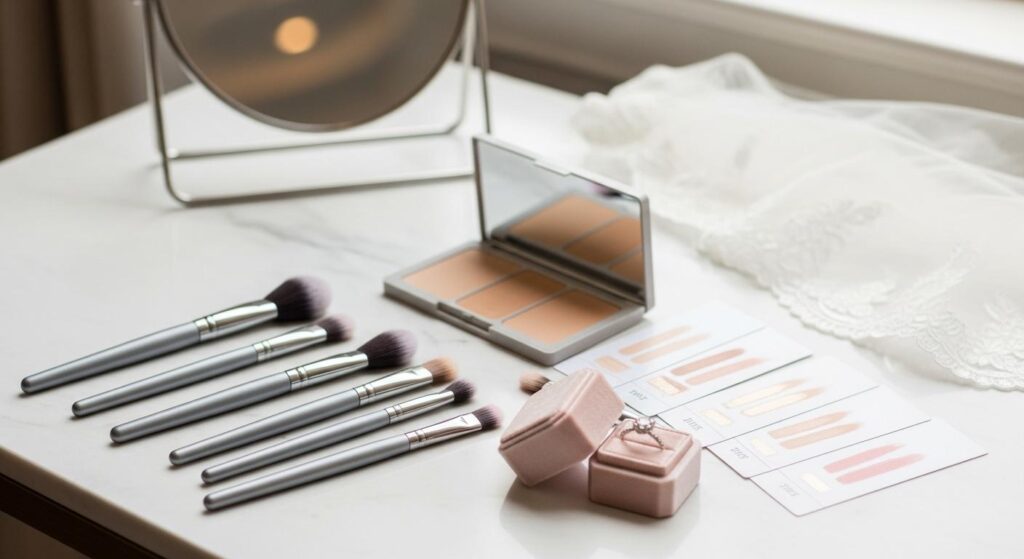
Visual context helps stylists immensely. Bring photos of your wedding dress, veil, bridal hair ideas, wedding hair trial notes, and hair accessories. Even jewelry or inspiration from wedding cakes or floral colors can guide balance.
If you love your own skincare or base makeup, bring it. Some brides prefer familiar formulas under professional makeup application. Lipstick you already adore is especially helpful for shade comparison.
Wear a button-down or wide-neck top, and bring your phone. Checking makeup in different lighting bathroom, window, outdoors often reveals things a studio mirror doesn’t.
Skin Preparation: The Quiet Driver of Great Bridal Makeup
Makeup sits on skin, not on intention. Cleansing and hydration shape how foundation wears, how blush blends, and how long everything lasts. Barrier-supporting skincare often improves comfort during long wedding days.
Over-exfoliation is a common misstep. New treatments, aggressive peels, or testing products too close to the trial can cause texture that even the best makeup artist can’t fully smooth.
In the weeks before your bridal makeup trial, consistency helps more than experimentation. A healthy glow looks different from excess shine, and your makeup artist can fine-tune that balance.
What to Test During the Trial (Beyond Just the Look)
Foundation wear is a big one. Notice creasing, oxidation, or separation after several hours. Smile, talk, move your face naturally. Wedding day makeup has to survive joy.
Eye makeup comfort matters, especially for sensitive or watery eyes. Lashes should feel secure, not distracting. Lip color should survive conversation and light eating without constant worry.
There’s also an emotional test. Do you recognize yourself? Do you feel confident standing taller? That feeling is part of the final look.
Understanding Adjustments After the Trial
Not all changes are equal. Tweaks in finish, blush placement, or brow softness are often simple. Larger shifts, like coverage level or undertone correction, may require product swaps.
Feedback is best shared within 24–48 hours, while details are fresh. Photos taken throughout the day help clarify what worked and what didn’t.
Some brides benefit from a second bridal makeup trial, especially if the first revealed skin sensitivities or if wedding hair, hair stylist choices, or style direction shifts.
Common Bridal Trial Misconceptions That Cause Stress
One myth is that makeup must feel heavy to last all day. In most cases, strategic layering performs better than thickness. Another is that fuller coverage always photographs best; often, skin-like finishes read fresher.
Skincare doesn’t stop once makeup starts. It quietly supports every step of makeup application. And while trends can be fun, bridal beauty works best when it suits your features, your comfort level, and your wedding day reality.
A bridal makeup trial isn’t about perfection. It’s about alignment between skin, style, and the right makeup artist so when the wedding morning arrives, you can sit back, breathe, and enjoy being the bride.
\